Body Flossing® vs Foam Rolling for Mobility
Body Flossing® vs Foam Rolling in Tucson AZ highlights key differences in fascia training methods used to improve mobility and support injury prevention in structured movement therapy settings.
A client presents with restricted shoulder mobility after months of desk work and intermittent training. They report stiffness, reduced range of motion, and mild discomfort during overhead movement. The question for a practitioner is not whether soft tissue work is needed, but which method will produce measurable results within a structured program.
Two commonly used approaches are Body Flossing® and foam rolling. Both target soft tissue restrictions, yet they differ significantly in application, mechanism, and outcomes. Understanding these differences is essential for professionals working in a Pilates studio, movement therapy setting, or rehabilitation fitness environment.
Understanding Fascia in Movement and Rehabilitation
Fascia is a continuous connective tissue network that surrounds muscles, joints, and organs. It plays a central role in force transmission, proprioception, and movement efficiency. Restrictions in fascia can limit mobility, alter biomechanics, and contribute to pain patterns.
In fascia training, the goal is not simply to release tension but to restore functional movement. This requires an approach that considers hydration, elasticity, and neuromuscular coordination. Techniques that compress, shear, or stretch fascia can influence these properties, but the method must match the desired outcome.
Both Body Flossing® and foam rolling fall under the broader category of myofascial techniques used in injury prevention and rehabilitation fitness. However, their effectiveness depends on how they interact with the fascial system.
Foam Rolling: Mechanism and Application
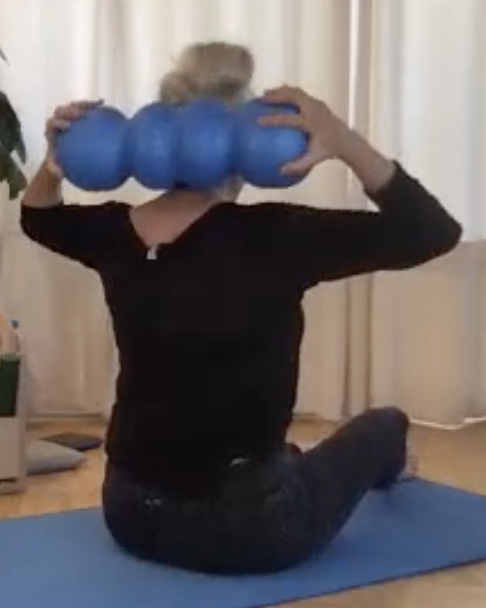
Foam rolling is a form of self-myofascial release that uses body weight to apply pressure to soft tissues. The practitioner or client rolls over a cylindrical surface to create compression and shear forces.
The primary effects of foam rolling include temporary increases in range of motion, reduced perception of muscle tightness, and improved circulation. These outcomes are supported by research showing that foam rolling can modulate pain sensitivity and enhance short-term mobility without negatively affecting strength performance.
From a movement therapy perspective, foam rolling is simple and accessible. It requires minimal instruction and can be integrated into warm-ups or recovery sessions. It is particularly useful for general tissue preparation before exercise.
However, foam rolling has limitations. The pressure applied is often diffuse and difficult to localize. Clients may compensate by shifting weight or avoiding sensitive areas, reducing effectiveness. In addition, foam rolling primarily addresses superficial tissues and may not sufficiently target deeper fascial restrictions.
For practitioners focused on injury prevention, foam rolling should be viewed as a preparatory tool rather than a corrective intervention. It supports movement but does not inherently retrain it.
Body Flossing®: Mechanism and Application
Body Flossing® involves wrapping a specialized elastic band around a joint or muscle group to create compression while the client performs active movement. The combination of compression and motion is the defining feature of this method.
The applied pressure temporarily restricts blood flow and alters tissue mechanics. When combined with movement, it creates a shearing effect between fascial layers. Upon release, there is a rapid return of circulation, which may support tissue hydration and mobility.
Unlike foam rolling, Body Flossing® is dynamic. It integrates movement patterns during the intervention, making it more relevant to functional outcomes. This aligns closely with principles used in rehabilitation fitness and Pilates, where movement quality is prioritized.
From a fascia training standpoint, Body Flossing® may influence both superficial and deeper layers due to the circumferential compression. It also provides clear proprioceptive feedback, helping clients become more aware of joint positioning and movement patterns.
However, Body Flossing® requires practitioner guidance. Incorrect application can lead to excessive compression or ineffective movement execution. It is not a passive technique and must be integrated into a broader movement therapy framework.
Key Differences in Clinical and Studio Settings
The distinction between these methods becomes clearer when applied in practice.
Foam rolling is best suited for general preparation, recovery, and maintenance. It is easy to scale across groups and works well in a Pilates studio setting where clients need a quick and effective warm-up. Its benefits are immediate but often short-lived.
Body Flossing® is more targeted and intervention-based. It is used when a specific restriction or dysfunction has been identified. Because it incorporates movement, it supports the transition from mobility gains to functional integration.
In injury prevention, foam rolling helps maintain tissue quality, while Body Flossing® addresses specific limitations that may lead to compensatory patterns. In rehabilitation fitness, foam rolling prepares the body, whereas Body Flossing® contributes to corrective strategies.
For practitioners, the choice is not binary. Both methods can be used within the same session, depending on the stage of training and the client’s needs.
Integrating Both Methods into Movement Therapy
An effective movement therapy program does not rely on a single tool. Instead, it combines techniques to support long-term adaptation.
Foam rolling can be used at the beginning of a session to reduce perceived stiffness and improve readiness for movement. It prepares the nervous system and creates a baseline level of mobility.
Body Flossing® can then be introduced to address specific restrictions. For example, wrapping the ankle during dorsiflexion exercises or the shoulder during overhead movements allows the practitioner to target limitations while reinforcing correct patterns.
The key is sequencing. Soft tissue interventions should lead directly into active movement, strength work, or Pilates-based exercises. This ensures that any gains in mobility are integrated into functional patterns.
Without this integration, improvements are temporary and do not translate into meaningful changes in performance or injury risk.
Application Within a Structured Pilates Environment
In a Pilates studio, precision and control are central principles. Both foam rolling and Body Flossing® must align with these principles to be effective.
Foam rolling should be performed with attention to alignment and breathing, avoiding excessive pressure or speed. It should support, not disrupt, the quality of movement that follows.
Body Flossing® should be applied with clear intent. The practitioner must select appropriate tension, duration, and movement patterns. It is most effective when combined with exercises that reinforce stability and coordination.
This approach reflects a shift from passive treatment to active rehabilitation fitness. Clients are not only receiving an intervention but also learning how to move more efficiently.
Our Approach at The Belly Studio
At The Belly Studio, we integrate both Body Flossing® and foam rolling within a structured movement therapy framework. Our focus is on achieving measurable improvements in mobility, strength, and movement quality.
We use foam rolling as part of initial tissue preparation, particularly for clients entering a session with general stiffness or fatigue. It allows us to create a baseline from which more targeted work can begin.
Body Flossing® is introduced when specific restrictions are identified. We apply it in combination with controlled movement patterns drawn from Pilates and rehabilitation fitness. This ensures that any increase in range of motion is immediately linked to functional use.
Our methodology emphasizes personalization. Each client undergoes an assessment to determine movement limitations, compensations, and goals. Based on this, we select the appropriate tools and sequence them within the session.
We do not treat these techniques as standalone solutions. Instead, they are integrated into a broader system that includes strength training, coordination work, and fascia training principles. This allows us to address both symptoms and underlying causes.
The outcome is not simply increased flexibility, but improved movement efficiency and reduced risk of injury. Clients develop greater awareness of their bodies and the ability to maintain these improvements over time.
FAQ
- What is the main difference between Body Flossing and foam rolling?
Body Flossing uses compression combined with active movement to target specific restrictions, while foam rolling applies broad pressure to soft tissue for general release and preparation. Body Flossing is more precise and movement-focused, whereas foam rolling is more passive. - Which method is better for injury prevention?
Both methods support injury prevention in different ways. Foam rolling helps maintain overall tissue quality and readiness for movement. Body Flossing addresses specific mobility restrictions that may lead to compensations if left uncorrected. - Can Body Flossing replace foam rolling?
These methods serve different purposes. Foam rolling is useful for general warm-up and recovery, while Body Flossing is a targeted intervention. They are most effective when used together within a structured movement therapy program. - Is Body Flossing safe for all clients?
Body Flossing should be applied with guidance from a trained practitioner. It may not be suitable for individuals with certain vascular conditions, acute injuries, or sensitivity to compression. Proper assessment is required before use. - How often should foam rolling be performed?
Foam rolling can be used regularly, including before and after exercise sessions. Frequency depends on activity level, recovery needs, and individual tolerance, but it is generally safe for consistent use.
Body Flossing® and foam rolling are both valuable tools in movement therapy, but they serve different purposes. Foam rolling provides general preparation and short-term relief, while Body Flossing® offers a more targeted and movement-focused intervention.
For practitioners in a Pilates studio or rehabilitation fitness setting, the key is understanding when and how to use each method. Effective application requires integration with active movement and a clear focus on long-term outcomes.
By combining these approaches within a structured program, it is possible to improve mobility, enhance performance, and support injury prevention in a meaningful and lasting way.
Visit The Belly Studio to improve mobility
The Belly Studio, founded by Arlene Corcoran, offers Pilates and Myofascial Fitness in with private training, and also online courses. Call today, to schedule a session, 520-661-0321.